
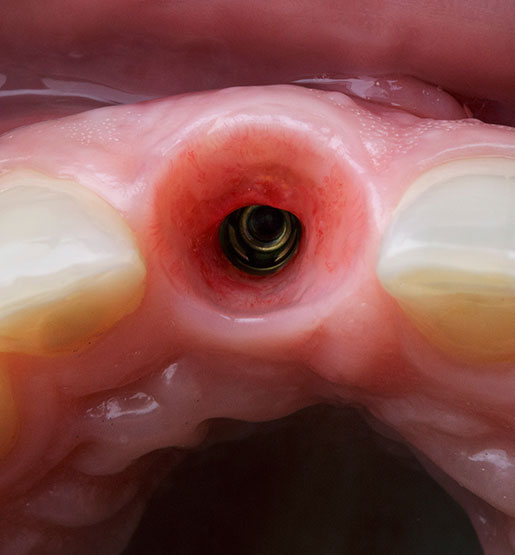
How is dental implant surgery performed?
Understanding the dental implant process is the first step toward making an informed decision. In this article, we explain each pase from planning to maintenance so you know what to expect.
What happens during dental implant surgery?
Dental implant surgery replaces the roots of missing or damaged teeth with titanium posts (they look like small screws) onto which artificial teeth or crowns are placed.
Please note that the process and cost depend on each patient’s specific conditions and the type of procedure required. For most patients, the treatment has two main phases.
Phase 1
Surgery and implant placement
In the first phase, the implant is placed into the jawbone. Healing time varies based on several factors, such as bone density. Within three to four months after surgery, the implants remain beneath the gum, gradually bonding to the bone (osseointegration). During this period, patients may use temporary prostheses.
Implant placement is a minor procedure done under local anesthesia and typically takes about one hour. Because surgery can trigger fear or anxiety for some people, sedation is available to help them relax.
Once this phase is complete and the implant has fused to the bone, Phase 2 can begin.
Phase 2
Surgical follow-up for implant exposure
This is an intermediate step to enable placement of the final prosthesis or crown.
The dentist uncovers the implant and places a healing abutment so the gum doesn’t grow back over it. About two weeks later, an impression is taken to fabricate the new teeth. Posts/definitive abutments are attached to the implant, and the crowns are fitted onto them.
Timeline: The two phases together generally take four to eight months, depending on the patient and the case.
Phase 3
Recovery and maintenance after implant surgery
After the teeth are placed, the focus shifts to maintenance. It’s essential to attend regular checkups with the specialist for professional plaque control. Excellent home care is equally vital to ensure long-term success.
In-clinic implant reviews are necessary to confirm everything remains in perfect condition. These are simple, routine visits but they are essential to the longevity of your implants.
Contact us to schedule an appointment.
How do I know if I’m a candidate for a dental implant?
Have you lost a tooth and wondered whether you qualify for an implant?
Today, dental implants are the best alternative to replace missing teeth, and anyone healthy enough to undergo a routine extraction or oral surgery can generally be considered a candidate.
If you’re considering implants, talk to our implant specialist to determine whether they’re right for you.
Book an evaluation to start your treatment.
Frequently questions
Implant placement is performed with local anesthesia or, if preferred, IV sedation, so the procedure is not painful. The post-operative period is usually mild if you follow your periodontist’s instructions.
Because it’s a straightforward surgery, most patients can resume normal activities the same day. Just follow simple post-op advice such as avoiding strenuous physical effort for one week.
Wait until the anesthesia wears off before eating or drinking (at least two hours after the procedure). On day one, choose a soft, cool diet hot foods or drinks may cause discomfort. After that, you can return to normal eating, but avoid chewing on the surgical side and skip irritating foods and strong condiments like coffee and spicy foods for the next four days.
See your periodontist for maintenance of any provisional teeth/prostheses to avoid direct loading on the implant while the bone heals. Avoid smoking, as it interferes with healing.
If an implant moves during osseointegration, it must be removed and replaced; stability is essential for bone bonding.
If, after osseointegration, the prosthetic screw (holding the abutment) loosens a common, easily managed complication the screw is tightened to the correct torque and the implant–crown connection is sealed again.
Early loss (2–3 months): usually due to lack of osseointegration, which may result from local infection, impaired healing (e.g., diabetes, radiation therapy, chemotherapy, bisphosphonate or corticosteroid use), or poor-quality implants.
Late loss (after ~6 months): most commonly due to poor hygiene, overload (from poor prosthetic design or malocclusion), and peri-implantitis.
Not all implant surgeries require grafting, but some patients do.
After a tooth is lost, the supporting bone gradually shrinks in height and width. If there isn’t enough bone, a bone graft is needed to support the implant. Likewise, tooth loss can thin or reduce the gum tissue; in such cases, a gum graft may be necessary to optimize the outcome.
Just like natural teeth, implants require excellent oral hygiene and regular visits with the periodontist to prevent mucositis (inflammation of the soft tissues around the implant) and peri-implantitis (infection affecting the bone and gum).
A dental implant is an important decision for your health.
Our team is ready to provide an accurate diagnosis and guide you through every phase of treatment. Contact us now to book your evaluation.