
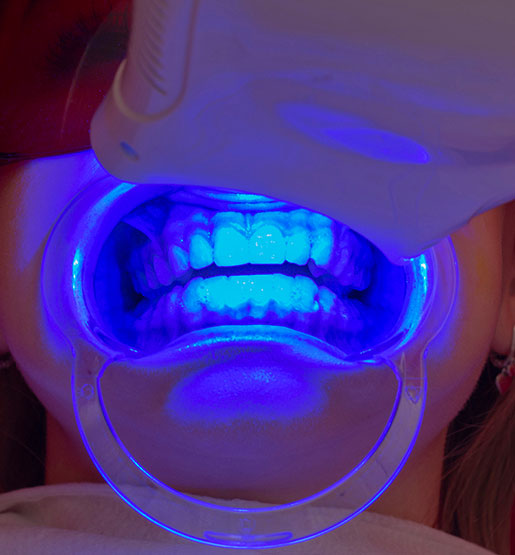
Teeth whitening in Monterrey
Teeth whitening is the aesthetic treatment par excellence. It’s the most requested procedure among patients and helps restore a smile’s natural, radiant tone.
Your oral health is our priority! Book your appointment now
Teeth Whitening: Causes, Methods, and the Importance of a Specialist
Tooth color can be affected by multiple factors throughout life. Understanding the causes of discoloration is essential to determine the most suitable whitening approach for each case.
- Hereditary: natural variation in tooth shades exists.
- Age: the natural aging process reduces luster and changes tooth tone.
- Pathological: taking tetracycline (an antibiotic) during tooth-formation years causes deep intrinsic stains.
- Habits: smoking and frequent consumption of coffee, cola, tea and wine promote darkening.
- Oral hygiene: accumulation of plaque and tartar alters tooth appearance.
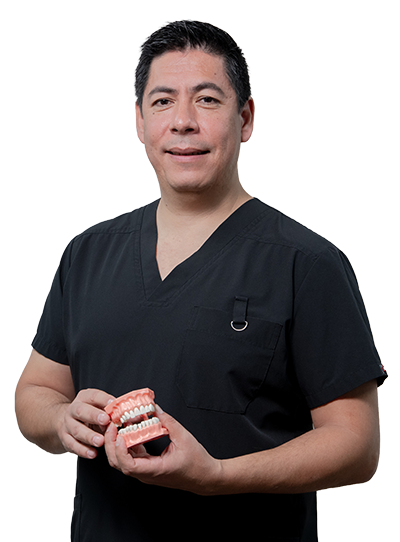
There are two in-office systems to whiten teeth: LED-lamp and laser-assisted. Dentists use hydrogen peroxide and carbamide peroxide as the bleaching agents.
At-home whitening kits and whitening toothpastes have become increasingly popular. So have offers from beauty salons, which often use products similar to dentists’ but in minimal concentrations that don’t produce meaningful results. They may also use abrasive materials that scratch enamel and make teeth look whiter temporarily far riskier, since enamel doesn’t regenerate once lost.
It is crucial that whitening be performed by a specialist
who first evaluates the degree and type of discoloration and checks for gingival recession, tartar, or caries, all of which could cause significant pain and worsen with unsupervised bleaching.
For safe, effective teeth whitening, schedule an appointment.
A professional whitening is the safest way to restore your smile’s natural tone.
Teeth whitening frequently asked questions
Patients need clean tooth surfaces free of plaque, no active caries or cracks, and healthy gums without infection or recession. Otherwise, whitening is not recommended because it can be harmful.
No. However, it can cause temporary sensitivity. This typically resolves with in 72 hours. During that period, the dentist may prescribe desensitizing products to keep you comfortable.
Whitening is contraindicated for people allergic to peroxide or with marked dentin hypersensitivity. Stains caused by tetracycline during tooth development are very difficult to remove with whitening alone; other cosmetic solutions like porcelain veneers or ceramic crowns may be more appropriate.
Longevity varies by diet and hygiene habits. Results typically last at least one year, but smokers and frequent coffee/wine drinkers may see shorter durability.
Whitening usually lightens several shades. Some people respond very well; others see more modest changes. Those with very yellow or stained teeth often achieve more noticeable improvement.
Whiter teeth can boost self-esteem, but obsessing over a paper-white shade can lead to dental health issues. Not all teeth share the same natural color it depends on each patient’s enamel.
A professional cleaning is essential to remove surface stains and tartar so the peroxide works at maximum effectiveness.
Avoid the habits that caused staining in the first place. Limit cola, coffee, wine, and acidic/sugary foods, and avoid tobacco.
There’s no clear evidence that whitening is harmful during pregnancy, but there also isn’t enough proof that it’s safe. The recommendation is to wait until after pregnancy and breastfeeding to undergo whitening.