
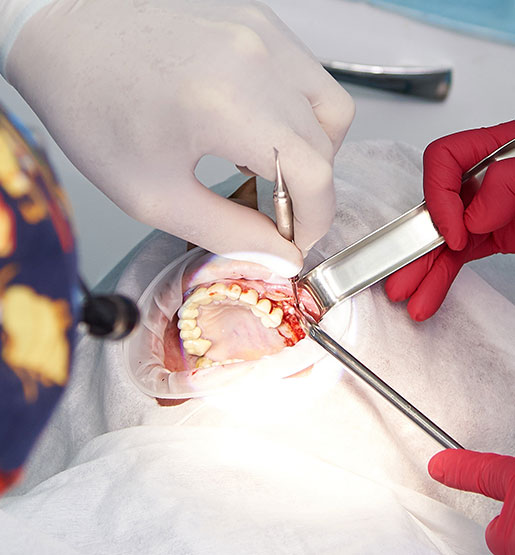
Sinus lift in Monterrey
A sinus lift is a surgical technique used in modern implant dentistry to allow placement of dental implants in patients who don’t have enough bone height in the upper-molar region.
Contact us to schedule a consultation.
Sinus Lift Procedure
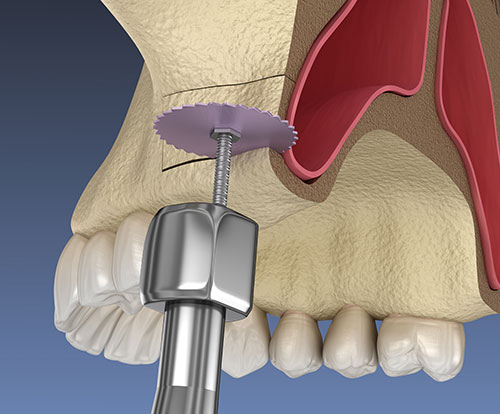
This procedure takes advantage of the two natural cavities on either side of the nasal passages and modifies them when there isn’t enough bone to properly anchor dental implants.
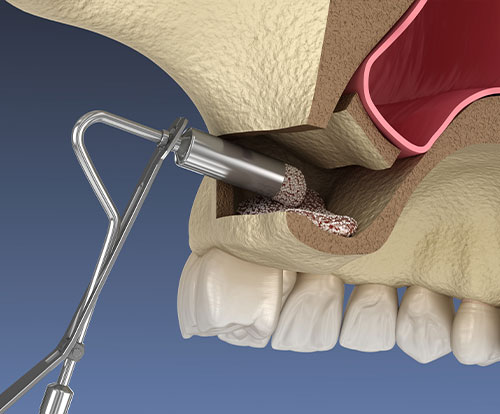
It is not an especially traumatic intervention, but it does require solid technical expertise. The surgeon elevates the membrane that lines the maxillary sinus and places additional bone beneath it so that an artificial tooth can later be implanted.
The grafted bone may come from the patient or from biomaterials that serve the same function as native bone. The result is sufficient bone volume to place implants without affecting facial structure.
Once the bone graft is placed, a 4–6 month wait is required before placing the dental implant. Today, techniques exist that allow a sinus lift and implant placement in a single stage, dramatically shortening total treatment time.
When performed correctly, complications are uncommon. If issues such as sinus-membrane perforation or nerve involvement occur, there are techniques to address them. It’s even possible to repeat the procedure if the grafted bone undergoes resorption.
This technique should not be performed in people with uncontrolled systemic diseases such as diabetes and high blood pressure, or in those with allergic rhinitis, sinusitis, or sinus cysts/polyps.
Frequently asked questions about sinus lift surgery
The maxillary sinus is the largest of the four paranasal sinuses—air-filled cavities inside the skull lined with mucosa and connected to the nasal passages.
Paranasal sinuses influence everyday functions like breathing and speech. There are four on each side of the nose:
- Frontal sinus.
- Ethmoidal sinus.
- Maxillary sinus.
- Sphenoidal sinus.
Before the procedure, the periodontist will request a cone-beam CT (CBCT) to evaluate the condition of the maxillary sinuses.
If sinusitis is detected, it must be resolved before surgery.
No. A sinus lift is performed under local anesthesia and is painless. It is a routine operation commonly done for patients who need dental implants.
A typical recovery involves notable swelling in the treated area, sometimes with bruising.
Swelling usually peaks at 48 hours, and most symptoms resolve within 7–10 days after surgery.
To minimize post-op effects, please follow these guidelines:
- Do not brush your teeth on the day of surgery. The next day, brush while avoiding the treated area.
- Wait at least two hours before eating or drinking.
- Follow a soft, cool diet for the rest of the day and avoid alcohol.
- Take all prescribed medications exactly as directed by your periodontist.
- Apply ice to the area for the first two hours after surgery.
- Reduce smoking as much as possible; smoking worsens recovery and can compromise implant success.
If you don’t have enough bone to place dental implants, a maxillary sinus lift may be the solution.
Contact us to schedule a consultation and receive a detailed treatment plan.