
Gum Graft in Monterrey
A gum graft corrects gingival recession (receding gums) by covering the tooth’s exposed root. It’s the solution to eliminate sensitivity, restore esthetics, and return your smile’s natural protection.
Call or message us to schedule an appointment!
Gum Graft:
Treatment for Gingival Recession
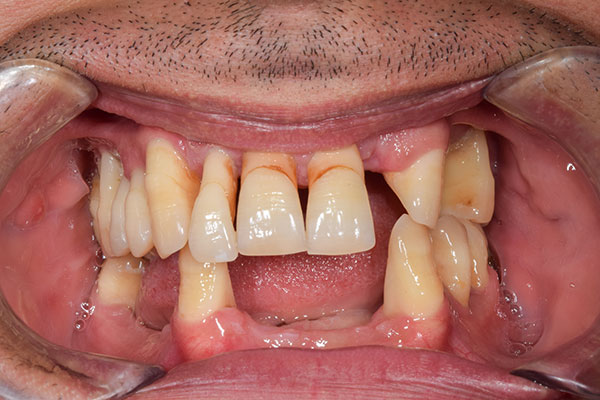
Gingival recession is a leading cause of tooth sensitivity and a less attractive smile. When recession is significant, the tooth root becomes exposed. Because the root is softer than the tooth’s crown, it can soften further and develop root caries due to bacterial activity.
Gum-graft surgery is designed to solve these problems.
Depending on the severity of recession and the condition of the gums, the graft can be performed using two techniques: a free gingival graft or a gingival graft with biomaterial.
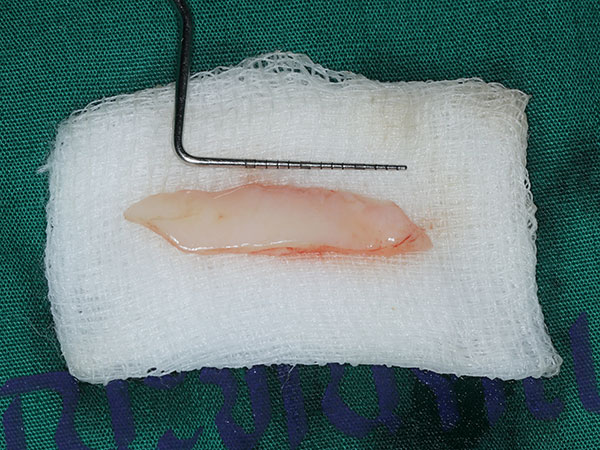
Free gingival graft: soft tissue is taken from the patient’s palate and placed over the area exposed by gum recession.
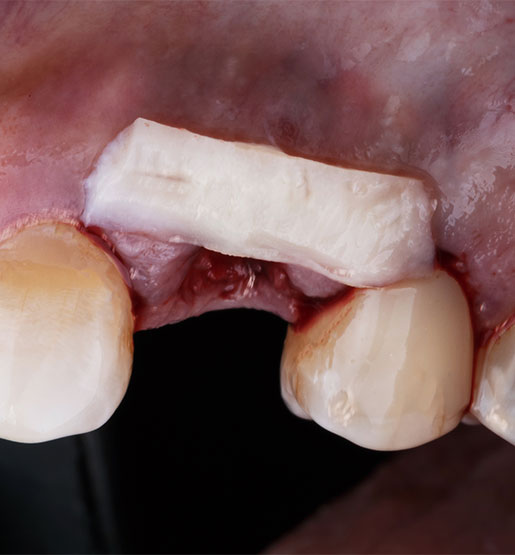
Biomaterial graft: a donor-derived substitute is used. The material is decellularized to prevent infection and, once placed, serves as a scaffold to guide new gum formation. This approach can shorten chair time, treat larger areas, and reduce post-op discomfort.
This procedure has a highly predictable, immediate success rate and results in a healthy, stable band of gum around the tooth.
The dental professional who performs this surgery is the periodontist, the dentist specialized in gum health.
Dr. Daniel Fernández is an accredited periodontist with over 15 years of specialty experience, having successfully completed hundreds of gum-graft surgeries.
Frequently Asked Questions About Gum Graft
Gums can recede for several reasons:
- Periodontal disease: both gingivitis and periodontitis result from the buildup of hardened tartar.
- Aggressive brushing: brushing too hard injures the gums.
- Trauma: a strong blow to the mouth can affect gum position.
- Smoking: the habit can alter the gums.
No. The procedure is not painful because it’s performed under local anesthesia. Patients may also choose conscious sedation during surgery for added comfort.
Surgery typically lasts about 1 hour, whether performed with a coronally advanced flap or by harvesting palatal tissue. Sutures are removed after 1–2 weeks.
When the graft comes from the patient, there’s no risk of rejection. However, excessive movement in the area after surgery can cause the graft to become necrotic. Note that some superficial necrosis of the graft is normal during healing.
With the coronally advanced flap technique, bruising or external swelling may appear for 4–5 days. The most important complication is insufficient root coverage; if that occurs, the procedure may need to be repeated. To determine whether a second surgery is necessary, wait 6–8 weeks, the time it takes for tissue to mature.
To reduce discomfort and avoid complications:
- Apply ice to the area for the first 4–5 hours to minimize swelling.
- Avoid hard, hot foods during the first 24 hours.
- Do not brush your teeth the day of surgery or the following day.
- Use chlorhexidine gel and mouthrinse as directed by your periodontist.
- Avoid activities that move the lips (playing wind instruments, blowing up balloons, contact sports, etc.).
- Depending on the procedure, your periodontist may prescribe antibiotics and pain relievers for 3–4 days.
- Stop smoking until the healing process is complete.
- Covers the exposed root of the tooth or implant, restoring natural protection against plaque and bacteria.
- Reduces the risk of future tooth mobility or tooth loss.
- Decreases dental sensitivity by protecting previously exposed areas.
- Improves smile esthetics by covering gum recessions.
Schedule a valuation appointment
A gum graft is the definitive solution for gingival recession.