
Periodontal Surgery in Monterrey
For advanced periodontitis, periodontal surgery is the indicated treatment to stop bone loss and save your teeth by eliminating deep infection where non-surgical treatments are no longer enough.
Call or message us to schedule an appointment!
Periodontal Surgery: Procedure and Treatment
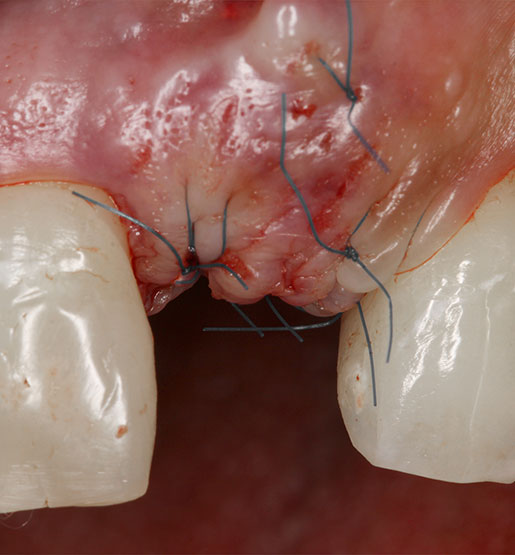
Periodontal surgery involves a small surgical approach to correct the bone and gum defects caused by periodontitis over the years.
When periodontitis is very advanced, it cannot be cured with scaling and root planing (curettage) alone surgery is required.
After initial curettage, any residual periodontal pockets in the gums can become reinfected. To prevent this, they are eliminated surgically by removing the diseased soft tissue and correcting bone defects with bone grafts using osseous surgery or regenerative techniques.
The bone grafts used in periodontal surgery may come from the patient, from a human donor (as with corneas or kidneys), or from an animal source most often bovine. All grafts are sterilized to prevent disease transmission.
For most patients, periodontal surgery is the most effective procedure to control periodontitis. The treatment is safe, efficient, and associated with minimal complications.
Book a consultation to evaluate your case.
Frequently asked questions about periodontal surgery
While post-op instructions are personalized, the day after surgery you should avoid hot, acidic, and irritating foods, as well as alcoholic beverages. Opt for semi-soft foods that are low in fat, chew away from the treated side, and drink plenty of cold fluids. By the second day, you can generally eat normally, but avoid crumbly foods such as chips and popcorn.
For the first four days, brush while avoiding the treated area. After this period and for two weeks, brush normally using a surgical toothbrush and a chlorhexidine mouthrinse. Avoid mouthrinses with alcohol.
After surgery, the gums may bleed slightly this is normal and should subside gradually.
Swelling in the treated area is also common and depends on each patient’s inflammatory response, the type and extent of surgery. Typically, inflammation lasts about four days; your periodontist will prescribe anti-inflammatories and recommend applying ice to the area.
Sutures are usually removed one week after surgery. However, if a biomaterial such as a bone graft, membrane, or AlloDerm (acellular dermal matrix) was used, a different suture may be placed and remain longer, depending on the case.
Periodontal surgery is the decisive step to control advanced periodontitis.
Schedule a valuation appointment today.