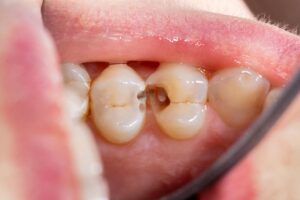
Dental implants are the best solution for replacing missing teeth. Beyond esthetics, they restore normal, efficient chewing.
Thanks to local anesthesia, the procedure is simple and painless.
Even so, many people hesitate out of fear that the body might “reject” an implant.
Strictly speaking, “implant rejection” is not the right term. Unlike organ transplants, the body does not reject the titanium used in dental implants.
Titanium is biocompatible, so it does not cause allergy or rejection. The accurate term is implant failure.
Reasons why dental implants fail
An implant can fail at different stages of treatment.
During the first (surgical) phase
Possible causes include:
- Bacterial infection during surgery or the postoperative period (peri-implantitis).
- Failure of the implant to bond properly to bone (osseointegration).
- Smoking, which impairs healing.
- Performing the procedure on a patient with poorly controlled severe diabetes, under bisphosphonate therapy, or receiving chemotherapy or radiotherapy.
- Poor oral hygiene.
- Using a suboptimal surgical technique for the patient’s anatomy.
- Using low-quality implants that are not pure titanium hence the importance of being treated by a dentist specialized in dental implants.
During the second (restorative) phase
Once the implant has integrated with bone, the main causes of failure are:
- Bacterial infections such as peri-implantitis.
- Smoking and therapies with bisphosphonates, chemotherapy, or radiotherapy.
- Overloading the implant functional forces that exceed the bone’s capacity to support them.
- Poorly designed prostheses placed on the implant.
What are the symptoms of implant rejection?
When an implant is failing, several signs can indicate that something isn’t right:
- Mobility of the implant during healing.
- Discomfort or pain when pressing on the implant site. (Mild post-op soreness is normal for a few days; persistent pain is not.)
- Pain on impression day. At this appointment once the implant should be osseointegrated the dentist scans the mouth to design the custom crown. Pain can be a red flag.
Can implant rejection be prevented?
Although there are many potential causes, keep in mind that when an implant is high quality and placed by a qualified professional, the risk of failure is very low around 2.5%.
Your best prevention strategy is to attend regular dental checkups, quit or reduce smoking, and maintain excellent oral hygiene.
If an implant does fail, the solution is usually straightforward: place a new implant and wait 3–4 months for healing.
This article clarifies that a dental implant is not “rejected”; rather, it can fail for specific reasons. As noted, the risk is minimal when using a quality implant placed by a trained specialist. This content is informational; only an evaluation by a specialist can ensure your case is planned correctly to minimize risks.
To maximize the success of your dental implant treatment, start with a specialist evaluation. Book your appointment via WhatsApp, phone call, or our contact form.