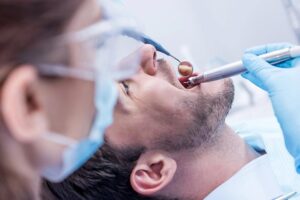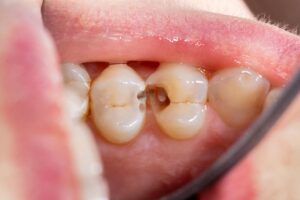
There are several reasons a tooth may need to be extracted: fractures due to trauma, severe cavities that can no longer be treated, or tooth mobility caused by periodontitis. However, the most common reason for extraction is the removal of wisdom teeth.
Before extracting a tooth, the dental professional will carefully review the patient’s medical and dental history and take the appropriate X-rays. These images reveal the length, shape, and position of the tooth and the surrounding bone. Using this information, the dentist estimates the degree of difficulty of the procedure.
One of dentistry’s main goals is to preserve natural teeth whenever possible, but in some cases a dental extraction is indispensable to prevent bigger problems.
Simple extraction and surgical extraction
There are two main types of dental extraction: simple extraction and surgical extraction.
A simple extraction is used to remove teeth that are easily visible, whereas a surgical extraction is required for teeth that are difficult to access or so damaged they must be removed surgically.
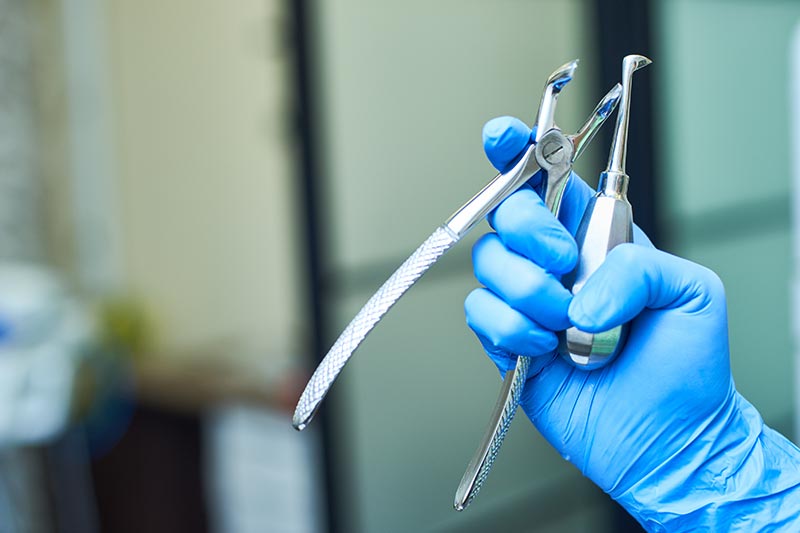
Before the procedure, the dentist anesthetizes the area around the tooth. In a simple extraction, the tooth is loosened with an instrument called an elevator and then removed with dental forceps. In a surgical extraction, an incision is made in the gum to access the tooth, and sometimes the tooth must be sectioned into smaller pieces to remove it safely.
What care is needed after an extraction?
It’s crucial to keep the area clean and prevent infection right after the procedure. For the next 24 hours, do not smoke or brush near the extraction site. To manage discomfort, your dentist may prescribe a pain reliever, and you should apply an ice pack to the cheek in 15-minute intervals to reduce swelling and discomfort. Avoid vigorous activity and hot liquids. Starting the day after the extraction, begin rinsing gently with warm saltwater.
This information is for guidance. Whether you need a simple or a surgical extraction depends on the condition of your tooth; a professional consultation is necessary to determine the best approach.
For an evaluation of a damaged tooth, book an appointment with Dr. Daniel Fernández.