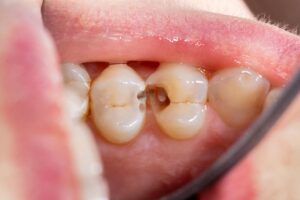
A dental filling is a treatment that removes tooth decay from a tooth to stop it from advancing and to avoid affecting the tooth’s nerve. It’s one of the most common and in-demand procedures in dentistry.
What is caries?
Dental caries is the most common oral disease and affects the majority of the world’s population. It’s more frequent in children, but age-related changes also make it a problem for adults.
Caries is the permanent damage to tooth enamel; it’s easy to identify because it leaves small holes on the tooth surface. It occurs when acids from dental plaque attack the enamel.
Plaque uses the sugars and starches we eat to produce acids that dissolve the minerals in enamel. In addition to damaging teeth, plaque and tartar (when plaque hardens) can harm the gums and cause periodontal diseases.
If cavities aren’t treated, they can spread into the deeper layers of the teeth, cause severe pain, and even lead to tooth loss. The main cause of cavities is poor oral hygiene. Other contributors include a high-sugar diet and dry mouth caused by certain medications or treatments such as chemotherapy.
There are 3 types of caries:
- Coronal caries: most common in children; usually appears on the biting surface of the tooth and is easily detected by tooth discoloration.
- Root caries: with aging, the gum commonly recedes, leaving the root exposed; because it’s not protected by enamel, plaque can attack it more easily.
- Recurrent caries: affects areas where a filling has been placed previously.
How is a dental filling done?
A dental filling is a simple procedure that takes about 40–50 minutes and includes 4 steps:
- Anesthesia: before beginning, the dentist may apply local anesthesia when the cavity is very advanced and has reached the dentin the deeper part of the tooth that contains nerve endings.
- Cleaning out the decay: the diseased tissue is removed. Eliminating the unhealthy portion leaves a cavity that must be filled.
- Filling the cavity: the remaining space is usually filled with resin (composite). Once the dentist completes the fill, a curing light is applied to harden the material.
- Polishing and bite adjustment: once the material has hardened, the filling is polished and the bite is checked to ensure an esthetic, functional result.
Do dental fillings hurt?
When the cavity has not reached the dentin, local anesthesia is typically not used. For that reason, you might feel slight discomfort during the procedure. After treatment, it’s also possible to feel sensitivity when eating very cold or hot foods, or even while brushing. This sensation may last 3 or 4 days.
What types of dental fillings exist?
Based on the filling material, there are two main types: metal and resin.
Metal (amalgam) fillings: Silver amalgam was widely used. Its main advantage is durability it can last up to 30 years. However, because silver amalgam stands out against the white of the tooth, it’s not esthetic and has largely fallen out of use.
Gold was also used for many years. Although very durable and resistant, it is expensive and, like silver amalgam, not discreet, so it isn’t commonly used today.
Resin (composite) fillings: Today, resin fillings are the most common because they are far more esthetic than metal fillings. Resin matches the natural tooth color; its main disadvantage is a shorter lifespan typically 5 to 7 years.
Because of this, it’s best to maintain excellent oral hygiene and visit the dentist at least once a year. This allows the dentist to monitor existing fillings and replace them when they begin to deteriorate.
This article explains what a filling is and the types available. The choice of material and whether you need treatment depends on a professional diagnosis.
Book an appointment with Dr. Daniel Fernández for a dental checkup and cavity diagnosis.