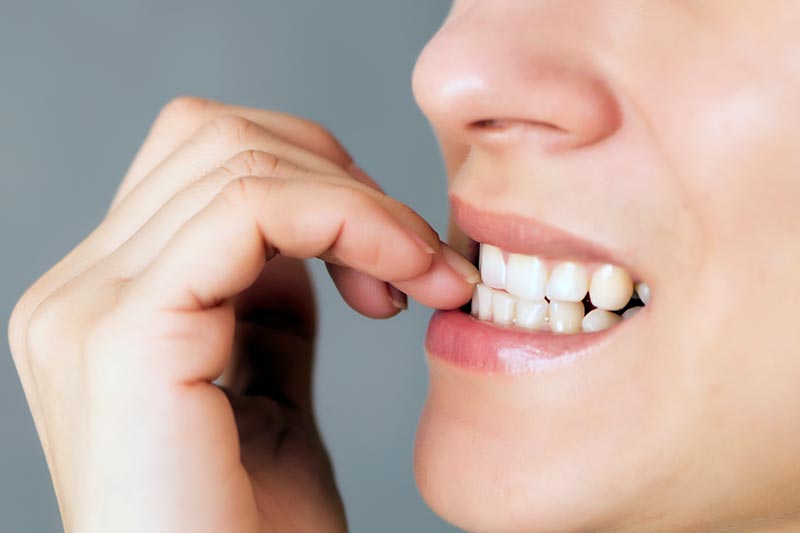
For most people, biting and chewing their nails is a harmless habit whose only consequence is unsightly marks and lesions on the fingers. Few realize that onychophagia, as this habit is also known, can affect oral health in several ways.
Dental wear
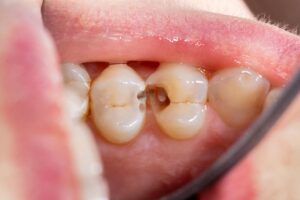
Constant nibbling can erode tooth enamel and cause micro-traumas, especially on the central incisors, and in some cases chip or fracture them.
If a person also has dental crowns or implant-supported prostheses, nail-biting can fracture their porcelain.
People who bite their nails and wear braces may risk loosening or debonding brackets, delaying their orthodontic treatment.
Bacterial problems and gum injuries
There are thousands of bacteria under the nails, whereas the rest of the hand usually harbors only hundreds. Prolonged contact with the nails can transfer bacteria to the mouth and cause oral and systemic infections.
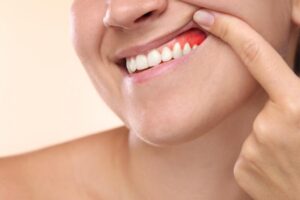
Gingival tissue is especially sensitive to this habit and can suffer lesions from nail friction. Constant nail-biting can also lead to gingivitis and, in more severe cases, periodontitis.
Jaw disorders
Nail-biting can also trigger jaw disorders. The forced position of the jaw during biting and chewing may alter the temporomandibular joint (TMJ) and cause pain.
Although this practice is very common in childhood, many adults continue onychophagia due to stress, anxiety, boredom, or a physical reason. Identifying the cause can help stop the habit and avoid oral-health problems.
The information in this post is for guidance. While nail-biting is a common habit, it can cause problems such as gingivitis or periodontitis; a checkup can detect these issues early.
If you bite your nails, contact us to schedule a checkup and evaluation.