The mouth goes through many changes over a lifetime. An important event that occurs between ages 17 and 21 is the eruption of the third molars, or wisdom teeth.
Wisdom teeth grow at the back of the gums and are the last teeth to emerge. Most people have four two on the top and two on the bottom but not always. Some people never develop them, while others may have just one, two, or three.
By the time they erupt, the other 28 adult teeth are usually already in place, so there isn’t always enough room for wisdom teeth to grow properly. This can lead to a series of problems that often make removal necessary.
What are wisdom teeth for?
To understand the function of wisdom teeth, we have to go back to our earliest ancestors. Early humans had much more developed jaws and musculature, and there was adequate space in the dental arches for these molars.
Their diet also consisted of plants and raw meat. In that context, wisdom teeth helped chew tougher foods. When the diet changed to include cooked meat, chewing became easier and our ancestors’ jaws became smaller, so these molars lost their function.
What problems can wisdom teeth cause?
A problematic wisdom tooth is one that is impacted or has not erupted correctly. The usual presentation is pain and inflammation. When this occurs, the tooth should be extracted as soon as possible, since it can cause various issues that may become serious, such as:
- Pericoronitis: infection of the gum surrounding the tooth when, during eruption, it remains partially covered by gum tissue.
- Bone infection: can destroy the bone around the wisdom tooth and affect neighboring teeth. The infection can spread to the cheek or neck, causing pain in the tooth, throat, and ear.
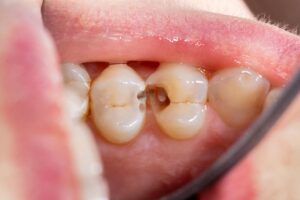
- Cavities in neighboring teeth: the area where wisdom teeth are located is hard to clean. Cavities on the rearmost surface of the second molar progress quickly.
- Follicular cysts: formed from the cells involved in tooth formation.
What does wisdom tooth extraction involve?
The extraction procedure depends on how deeply the tooth is impacted.
The intervention is performed by a dentist under local anesthesia. In some cases, sedation may be used to put the person to sleep, depending on the position of the tooth to be removed and the patient’s medical history.
Once anesthesia takes effect, the dentist widens the socket (the area where the tooth sits) with an instrument called an elevator, then moves the tooth side to side until it is loose enough to be fully removed.
However, if the tooth is difficult to extract, it may be necessary to make an incision in the gum, section the tooth into several pieces, and even remove a small amount of jawbone to access it, then close the wounds with sutures.
In most cases, wisdom-tooth extraction takes a few minutes, but the more difficult cases can take up to an hour.
After the procedure, minor complications are possible. Due to anesthesia, there may be nausea, vomiting, and temporary numbness of the mouth. It is also quite common though without consequences to develop a bruise on the cheek in the area where the procedure was performed.
Do wisdom teeth always have to be extracted?
Extraction may not be necessary if the wisdom teeth:
- Are healthy.
- Have fully erupted.
- Are in the correct position with proper bite against the opposing tooth.
- Can be cleaned as part of daily oral higiene.
The importance of the oral and radiographic exam
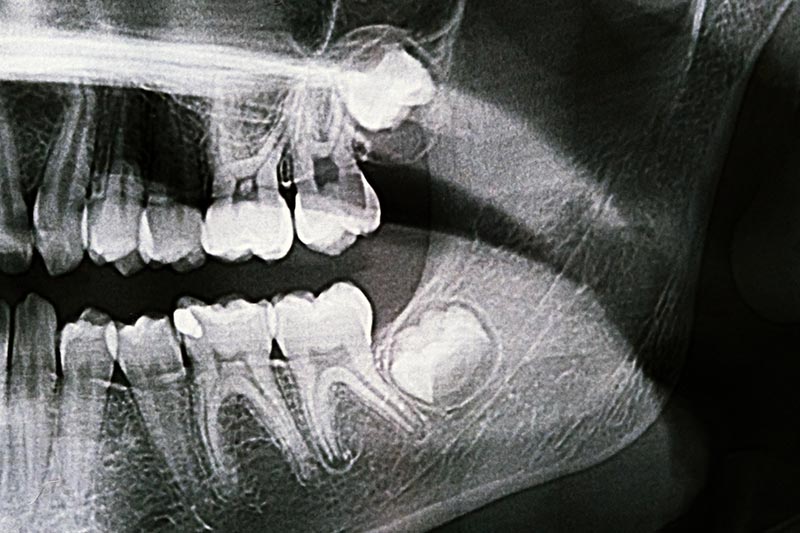
As soon as wisdom teeth emerge, you should see your dentist. Through an oral exam and a panoramic X-ray, the dental professional can determine their status whether they are erupting correctly or if they will affect other teeth. Your dentist is the best person to advise whether extraction is needed.
The information in this publication is for guidance. A wisdom tooth that has not erupted correctly can cause serious problems such as infection; therefore, a professional evaluation is important.
For a professional evaluation of your wisdom teeth, contact us to schedule an appointment.