Bruxism is the contraction of the jaw-closing muscles whether teeth are present or not. When teeth are present, bruxism includes grinding or clenching the teeth together, and it can occur while awake or asleep.
Most of us have clenched our teeth at some point before a stressful event or noticed that upon waking it’s hard to open the mouth, sometimes with a muscle spasm that also affects the neck and back.
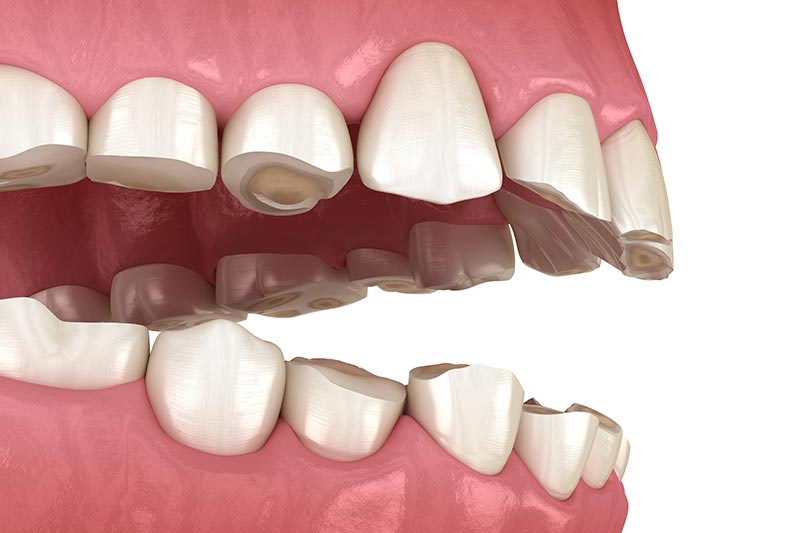
Approximately 10% of people with bruxism grind their teeth, producing visible wear teeth become shorter and lose their cusps. The other 90% mostly clench, so wear is less visible; the damage occurs at the tooth neck near the gumline and is called abfraction.
Abfractions associated with clenching-type bruxism can cause significant loss of tooth structure at the neck over time. With grinding-type bruxism, the wear can be so severe that a large portion of the teeth gradually disappears.
How is bruxism diagnosed?
In most cases, diagnosis is based on recognizing the habit when a person is aware of clenching or grinding. If they aren’t aware, the degree and pattern of wear reveal the presence and intensity of bruxism.
What are the symptoms of bruxism?
- Tooth, jaw, head, and neck pain: sustained pressure creates tension, inflammation, and pain; sometimes it radiates to the ears.
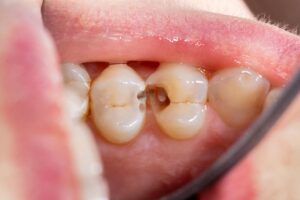
- Tooth wear, fractures, or enamel cracks: continuous force weakens teeth and can cause serious lesions.
- Muscle and tooth sensitivity: especially in the morning. Sensitivity to hot/cold foods or tenderness when chewing is common when lesions are present.
- Bite changes: continuous pressure on the jaw can alter the occlusion.
- Insomnia or poor sleep quality: jaw tension can disrupt sleep.
- Neck problems, dizziness/vertigo: strong jaw pressure can trigger cervical muscle spasms due to the area’s proximity.
What causes bruxism?
- Anxiety or stress disorders: the most common cause. Daytime problems and anxious situations can translate into nighttime jaw tension and friction.
- Oral problems: a malocclusion, a missing tooth that causes neighboring teeth to migrate, or a broken tooth that rubs against another can all provoke bruxism.
- Sleep disorders: conditions like insomnia can lead to jaw tension.
What are the consequences of bruxism?
The forces generated by bruxism can be strong enough to break a tooth and can even damage the materials used in implant-supported restorations.
When teeth have reduced support due to periodontal disease, the risk of tooth loss doubles; if smoking is also present, the risk can become four times higher.
How is bruxism treated?
Bruxism isn’t a disease per se but a muscle activity with varying intensity. The most effective way to protect teeth from wear caused by bruxism is a rigid occlusal guard (night guard) that allows the jaw to move freely while shielding tooth surfaces.
How can bruxism be prevented?
First, identify the underlying cause whether stress/anxiety, sleep disorders, malocclusion, or crooked/missing teeth.
Because nocturnal bruxism is hard to control consciously, the recommendation is to wear a rigid occlusal guard at night to prevent grinding and tooth wear.
This article explains that bruxism can have various causes, such as stress or bite problems. To prevent it, it’s essential to determine the cause; a professional evaluation can help identify it.
If you have jaw pain or notice tooth wear, contact us to schedule an appointment.