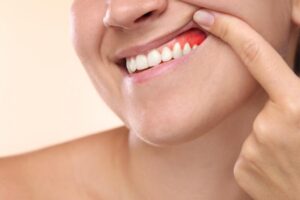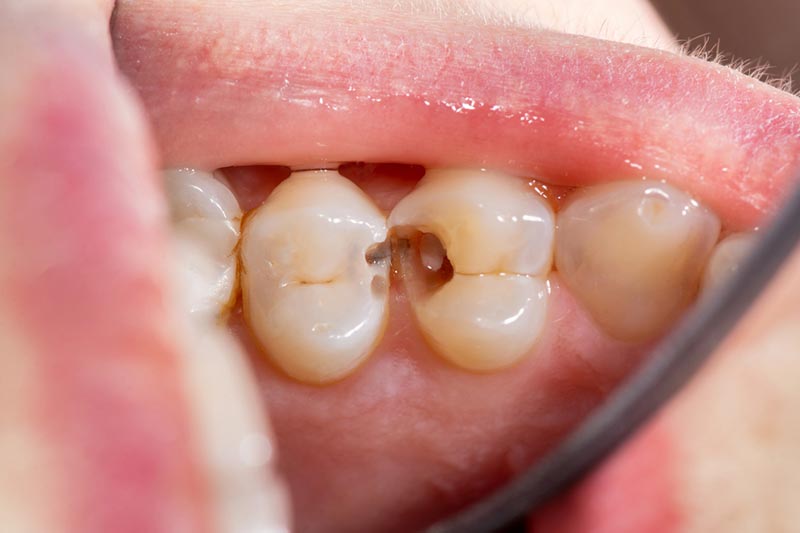
Dental caries is the destruction of tooth enamel, the hard outer layer of the teeth.
Plaque, a sticky film of bacteria, forms constantly on teeth. When you eat or drink foods that contain sugars, the bacteria in plaque produce acids that attack enamel.
Because plaque adheres strongly, these acids remain in contact with the teeth and, over time, enamel can break down. That’s when decay (a cavity) forms.
Caries is strongly influenced by lifestyle both the type of diet we consume and our oral-hygiene habits.
Caries is more common in children, but age-related changes also make it a problem for adults.
There are 3 types of caries:
Coronal caries: The most common type; it occurs in both children and adults, generally on chewing surfaces or between teeth.
Root caries: It’s common for people over 50 to develop caries on the tooth roots. Gum recession can expose the root to plaque. The root is covered by cementum, a softer tissue than enamel, making it more vulnerable to decay and more sensitive to hot and cold.
Recurrent caries: Caries around the margins of dental fillings is also common in older adults. Over the years, fillings can fracture and leak around the edges. Bacteria collect in these tiny gaps, increasing the acids that cause decay.
Adults are at particular risk of caries if they suffer from dry mouth, a condition caused by lack of saliva due to certain diseases, the use of some medications, or radiotherapy/chemotherapy treatments.
Caries can be serious. If untreated, it can kill the tooth’s nerve, which in turn may cause an abscess or infection.
Once an abscess has formed, the only possible treatments are a root canal or tooth extraction.
What’s the relationship between diet and caries?
Several foods acidify the oral environment and therefore damage enamel.
Foods with refined sugars more easily metabolized and sticky tend to produce more caries. Likewise, starches from various sources that have undergone industrial processing (such as wheat and corn) can acidify the oral environment.
Sodas and some juices can also erode teeth when consumed frequently.
However, frequency matters more than quantity: more frequent intake means more acid attacks on enamel. Snacking between meals and before bed is especially harmful.
How do I know if I have a cavity?
Only a dentist can determine with certainty whether someone has a cavity.
The tooth’s first layer enamel has no sensitivity. Discomfort appears only when decay reaches the dentin, which means the caries has already advanced significantly.
Patients should watch for the following signs in any tooth:
- Increased sensitivity.
- Color changes.
- A hole in the tooth structure.
Some signs require urgent attention from a dentist:
- Pain.
- Bleeding.
- Dental abscesses or infections.
- Tooth fracture.
What is the treatment for caries?
Treatment depends on the stage:
For early caries, the indicated treatment is a filling: the affected tissue is removed and the space is filled with a suitable material.
If caries has reached the pulp (nerve), the dentist must perform a root canal.
In advanced cases where the tooth is completely destroyed or the infection is so extensive the tooth cannot be saved, extraction is necessary followed by tooth replacement.
How to prevent cavities?
- Brush at least twice a day and floss.
- Visit the dentist regularly for cleanings and exams.
- Eat a balanced diet and limit starchy and sugary foods. Also, try not to snack between meals.
- Use fluoride-containing products.
If you want to learn more about caries and the treatments we offer at the clinic, don’t hesitate to call or write we’ll be happy to help.
The information in this post is for guidance. As noted, only a dentist can determine with certainty whether you have a cavity, since the tooth’s first layer has no sensitivity.
If you have sensitivity or pain, get a professional diagnosis; send us a message to schedule your appointment.