Acellular Dermal Matrix (ADM) supports soft-tissue regeneration and is widely accepted and used in Dentistry for gum grafts and bone regeneration.
A gum graft is indicated when:
- There is gingival recession.
- There is insufficient vestibular depth of the mouth.
- Gingival volume is lost after a tooth is removed due to trauma or infection.
The most common reason for a gum graft is gingival recession.
What is gingival recession?
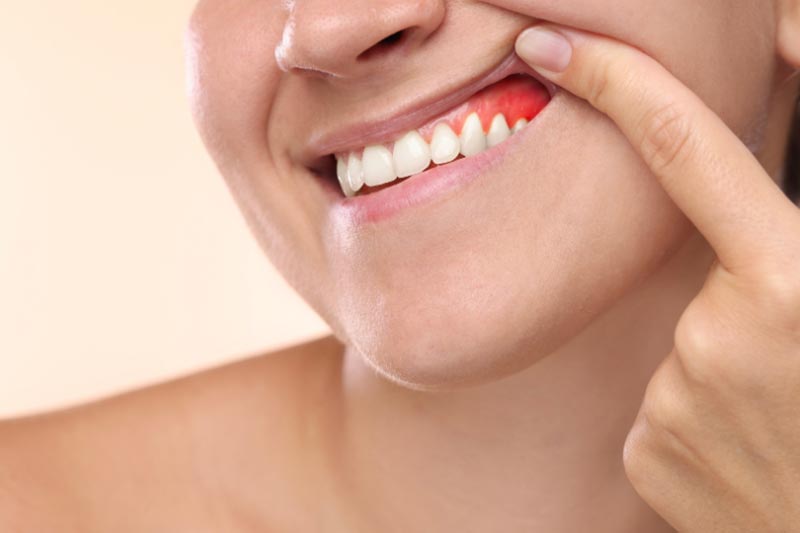
Gingival recession is the process in which the gum retracts, leaving parts of the tooth previously covered by gum exposed.
This loss is mainly due to anatomical causes that is, very thin gingival biotypes and tooth malpositions which, combined with a triggering factor such as periodontal disease and/or aggressive brushing, result in recession.
In more advanced cases, gum recession compromises the bone that supports the teeth, causing tooth mobility that affects their stability.
Because this process is gradual, many people aren’t aware of the recession until it’s more advanced that is, when the consequences become evident: greater tooth sensitivity, root caries in the area, and the visible impression that more tooth shows than usual.
The best-known classification of gingival recessions is Miller’s classification (1985), which divides them into Grades I–IV depending on their extent and the tooth surfaces involved.
What is a gum graft?
A gum graft consists of harvesting soft tissue from a donor site to cover an exposed tooth root or to cover an exposed dental implant.
Thanks to this periodontal plastic surgery, potential future problems caused by gingival recession can be avoided.
The dental professional who performs this procedure is the Periodontist the dentist specialized in gums.
Benefits of a gum graft for oral health:
- By covering the exposed tooth root or implant, the graft restores the gum’s natural protection against dental plaque and bacteria.
- It helps prevent root caries and slows the progression of periodontal diseases.
- It halts soft-tissue loss and reduces the likelihood of future tooth mobility or even tooth loss.
- It reduces dental sensitivity by covering the exposed root.
- It restores the natural appearance of the smile, maintaining harmony with the surrounding gum.
What are the advantages of performing a gum graft with ADM?
Depending on the severity of recession and the condition of the gums, different grafting approaches can be used:
- Free epithelial graft.
- Connective-tissue graft.
- Coronally advanced flap.
- Pedicle flaps.
- Combinations and modifications of the above.
The most popular due to excellent clinical outcomes is the connective-tissue graft combined with a coronally advanced flap. However, it has drawbacks:
- It requires a second donor surgical site (palate or edentulous ridge), with possible complications (bleeding, necrosis…).
- Greater postoperative discomfort for the patient.
- Anatomical limitations such as flat palates and thin palatal tissue.
- Limited tissue availability when there are multiple recessions.
Using Acellular Dermal Matrix allows the clinician to perform the necessary procedure without the limitations associated with palatal harvesting and limited tissue supply. It is a safe alternative to using the patient’s own tissue and offers these advantages:
- Good availability.
- No second surgical site required.
- Comparable results to those obtained with the patient’s own tissue.
Where does ADM come from?
ADM is obtained from human donor skin. The tissue is processed to remove the epidermis and cellular components. The remaining dermal layer is washed with a patented detergent solution to inactivate viruses, then cryopreserved and lyophilized, yielding a preserved matrix of collagen and elastin that does not trigger rejection.
This matrix serves as a scaffold that hosts fibroblasts and angiogenic cells, allowing it to become incorporated and gradually replaced by the patient’s own tissue.
What other uses does ADM have?
Since the 1990s, ADM has been used in major burn treatment, tympanic-membrane reconstruction, nasal reconstructions, treatment of dermal atrophies, fistula repair, and facial aesthetic plastic surgery. In Dentistry, its use has been documented since 1996.
Dr. Daniel Fernández has over 10 years of experience performing gum grafts with Acellular Dermal Matrix. If you have questions or would like to learn more about the treatment, call or write to us we’ll be happy to help you.
The information in this publication is for guidance. The choice between an autogenous tissue graft and Acellular Dermal Matrix depends on each case; only a periodontist can recommend the best option for you.
To treat your gum recession using the most up-to-date techniques, contact us to schedule an appointment.