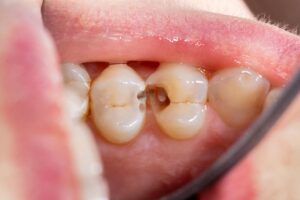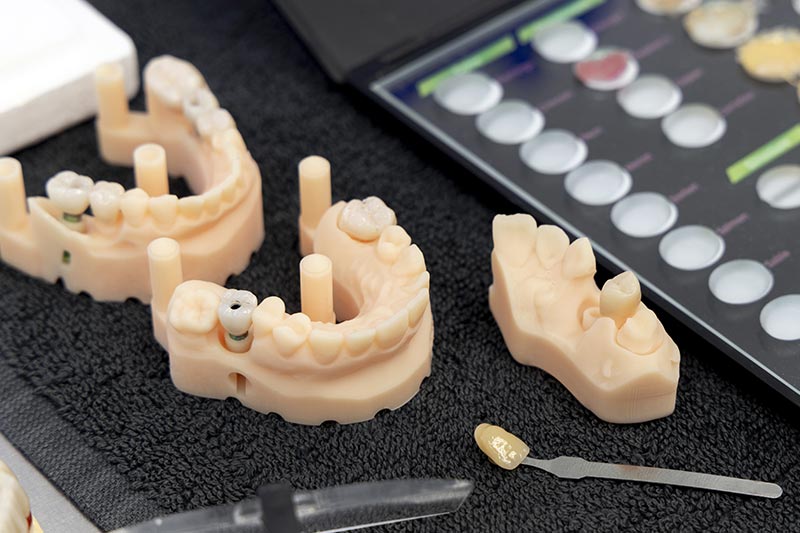
Dental implants are the best option for people who have lost one or more teeth because they look and feel like natural teeth. They’re also considered a definitive treatment they can last many years, even a lifetime.
Call or message us to schedule an appointment!
At our Dental Clinic in Monterrey, Nuevo León, we know how important it is for patients to understand as much as possible about the implant treatment they’re about to receive. That’s why this post shares a classification of the implant types we use.
Endosteal dental implants and subperiosteal dental implants
Generally speaking, there are two main types of dental implants: endosteal (osseointegrated) implants and subperiosteal (juxtabone) implants.
Endosteal or osseointegrated dental implants
Endosteal/osseointegrated implants are designed to be placed within the maxillary or mandibular bone. These implants bond to bone through a process called osseointegration, a mechanical union in which bone cells adhere to the implant surface.
After 3 to 4 months, when osseointegration is complete, the prosthesis or crown is placed to give the appearance of a natural tooth.
Today, screw-type implants are the most widely used because they offer the best results and greatest longevity.
Subperiosteal (Juxtabone) Dental Implants
This type consists of a metal framework placed on the jawbone just beneath the gum tissue. Because of this, their shape conforms to the bone’s contour so they can be secured properly.
Subperiosteal implants are used in patients who cannot wear conventional dentures and who have minimal bone height. They are falling out of use, as they involve more extensive surgery and longer, more complicated recovery.
Classification of dental implants according to their material
Implants can also be classified by what they’re made of. The two main materials are:
Zirconia Dental Implants
Zirconia is a white, extremely hard, and highly resistant material.
Zirconia implants bond to bone through biointegration, a type of union that is faster and more intense than the osseointegration seen with titanium implants.
Despite the advantages, there aren’t many long-term studies on their performance and durability. They are not recommended for immediate loading, and they are more expensive than titanium implants.
Titanium Dental Implants
Titanium is the most traditional material for dental implants a steel-like colored metal that is lighter, easily shaped, and extremely hard.
Titanium stands out for its excellent biocompatibility, which helps prevent rejection, and for its capacity to adhere to bone through osseointegration, keeping the implant stable and immobile (failures occur in only about 5% of cases).
Titanium’s mechanical properties are ideal for withstanding the chewing loads transmitted by implant-supported prostheses.
Because titanium implants are backed by decades of scientific research, they are considered the best implants available today.
What are the types of dental implants based on their placement?
Another way to classify implant types is by how the replacement teeth are delivered:
Two-stage
In the first stage, the implant is placed and left to integrate with bone. In the second stage, 3 to 4 months later, the crown or prosthesis is fitted.
Immediate loading
Another popular option is immediate loading. 24–48 hours after implant placement, a temporary prosthesis is attached. This technique is intended for patients who have lost one or several teeth or whose teeth are severely compromised.
All-on-4 and All-on-6
For patients with total or partial tooth loss, these techniques place a full arch on 4 or up to 6 implants at once. Both offer multiple benefits faster treatment and greater comfort since fewer interventions are needed.
What is the price of dental implants?
Thanks to misleading advertising, questions about implant pricing have increased. At our Dental Clinic in Monterrey, here are the main factors that influence the final cost of implant surgery:
- Type of implant.
- Abutment and components.
- Prosthesis and lab work.
- Surgeon’s experience.
- Case complexity.
- Professionals involved.
- Follow-up visits.
If you’d like more information about our dental implant treatment, contact our implant specialists to schedule an evaluation appointment.
This article classifies the different types of dental implants by placement protocol, material, and technique. Choosing titanium vs. zirconia, or immediate loading vs. two-stage, depends on an individual diagnosis. This content is for guidance; a professional evaluation is essential to determine the right solution for your case.
Discover which type of dental implant is best for you. Book an evaluation. Contact us via WhatsApp, phone call, or through our form.