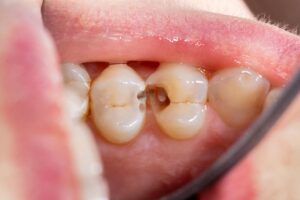
A dental implant is a metal component made of titanium that is surgically placed in the jaw. It is designed to replace the missing root and hold the artificial tooth in place.
Because the titanium in implants fuses with the jawbone, implants don’t move, don’t damage neighboring teeth, and don’t harm the bone the way some fixed bridges or dentures can.
Why are implants your best tooth-replacement option?
Today there are several types of dental prostheses to replace a missing tooth, but the most comfortable, effective, and durable solution is dental implants, because they:
- Boost self-esteem: the most esthetic solution for replacing teeth. You’ll look younger, since missing teeth cause bone loss and, with it, premature facial aging.
- Provide confidence: they feel just like natural teeth. You can smile, eat, and speak normally.
- Last a long time: they can last many years even a lifetime if you follow the recommended care.
How is the dental-implant placement process?
The implant process consists of five steps:
Step 1
Your periodontist will prescribe a Cone Beam CT scan to determine how many implants are needed and whether you have enough bone to place them.
Step 2
If there is sufficient bone height in the upper jaw, the periodontist will perform a surgery called a maxillary sinus lift.
Step 3
Whether or not a sinus lift was necessary, the implants are placed in the maxilla or mandible under local anesthesia and, if desired, with conscious sedation.
Step 4
It’s important for the implant to bond firmly to the bone. For this reason, 3 to 4 months are allowed to pass before placing the definitive implant-supported prosthesis. During this period, the periodontist will provide a temporary prosthesis to cover the gap.
Step 5
Once the implant has integrated with the bone, the doctor places the final prosthesis, which is either cemented or screwed onto the implant.
What is recovery like after implant surgery?
Although implant surgery is an outpatient procedure, it is still invasive. Your dental professional will provide instructions to keep discomfort to a minimum and help ensure treatment success.
Key recommendations:
- Hygiene: On the day of surgery, avoid mouthrinses and toothbrushing. The next day, resume your routine, taking special care not to brush the surgical area.
- Bleeding: It’s normal for the operated area to bleed during the first day or two. Use gauze to absorb blood and change it periodically. The first night, sleep with your head slightly elevated.
- Physical activity: Avoid exercise for one week to reduce the risk of bleeding, pain, or swelling.
Do implants last a lifetime?
If osseointegration occurs properly, long-term implant success is very high: it is estimated that over 90% of patients keep their implant 15 years after the procedure.
Even so, certain factors can lead to failure especially peri-implantitis, a chronic inflammation and infection of the tissues around the implant. If not controlled, this condition can ultimately lead to implant loss.
To prevent problems, maintain excellent oral hygiene and see your periodontist regularly for checkups.
This article describes the steps involved in dental-implant placement, from initial diagnosis to the definitive prosthesis. It’s important to understand that each step including whether you need a Cone Beam study or a sinus lift must be determined by a specialist. This content is for guidance only and does not replace a clinical evaluation for treatment planning.
Restore the function and esthetics of your teeth with a fixed, long-lasting solution. Book a dental-implant evaluation. Contact us via WhatsApp, phone call, or through our contact form.