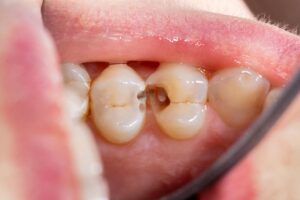
What is Ludwig’s angina?
Ludwig’s angina is a serious, dental-origin infection that involves the soft tissues of the neck and the floor of the tongue. It progresses quickly and quietly, so prompt diagnosis is essential.
It’s a rare condition and often missed at first, which can delay treatment and lead to severe, potentially life-threatening complications. In its late stages it can cause cardiorespiratory arrest, and, if not properly treated, sepsis.
What are the symptoms of Ludwig’s angina?
Patients typically report neck pain and swelling with sore throat, and may present with high fever and chills. Since the origin is usually tooth decay or dental abscesses, there may also be tooth and jaw pain.
Because most people aren’t familiar with the disease, be alert for:
- Neck swelling and redness.
- Confusion.
- Difficulty breathing and swallowing.
- High fever (over 39 °C / 102.2 °F).
- Cervical (neck) pain.
- Swelling under the chin or in the floor of the mouth.
- Drooling.
- Fatigue/exhaustion.
- Unusual speech.
What causes Ludwig’s angina?
In ~90% of cases, the infection is dental in origin. Other possible causes include submandibular gland sialadenitis, open mandibular fractures, lacerations of oral soft tissues, and wounds to the mouth floor.
Certain conditions favor its development, such as immunosuppressive medications, autoimmune diseases, and post-transplant status.
If the infection compromises the airway, it is a medical emergency requiring immediate hospitalization.
Diagnosis of Ludwig’s angina
If visual exam isn’t conclusive, your dentist/physician may order MRI or contrast-enhanced CT to confirm swelling at the mouth floor. Fluid cultures from the affected area can identify the causative bacteria. A thorough head-and-neck exam looks for visible or palpable signs.
Treatment for Ludwig’s angina
Ludwig’s angina is an emergency seek your dentist immediately, or in severe cases, go to the nearest emergency department.
First, clinicians secure the airway and control inflammation. If you can’t breathe adequately on your own, they may place a flexible tube (intubation) to deliver oxygen. If the mouth/throat is too swollen, the tube may be inserted via the nose or through the neck (tracheotomy).
Once breathing is stable, you’ll likely continue IV antibiotics at home via a special catheter. Typical duration is 2–3 weeks. It’s crucial to complete the full antibiotic course as prescribed to prevent relapse.
Mortality rate of Ludwig’s angina
Research indicates it is potentially fatal, with an approximate mortality rate of ~5%.
How can Ludwig’s angina be prevented?
- Maintain excellent oral hygiene: brush at least twice daily, use an antiseptic mouthrinse, and floss once a day.
- Never ignore dental pain or changes in gum color/swelling. Seek care if you notice bad odor, or bleeding from the tongue, gums, or teeth.
- Pay close attention to any problem in the mouth area. Inform your dentist if your immune system is compromised or you’ve had recent oral trauma, including a tongue piercing.
This article explains that Ludwig’s angina is a severe infection with dental origin in ~90% of cases. Don’t ignore symptoms like an abscess or intense pain timely evaluation is the best prevention.
Prevent serious complications book a dental evaluation with Dr. Daniel Fernández.