The tongue is a muscle that lets us chew, swallow, taste, and speak yet it’s often the most forgotten part of oral hygiene.
Because of its grooves and fissures, the tongue is a constant trap for oral biofilm. When it isn’t cleaned, a whitish coating forms on its back third, which is a main cause of bad breath. Regular tongue cleaning helps prevent halitosis, as well as problems like cavities, xerostomia (dry mouth), and periodontal disease.
How do I know if my tongue is healthy?
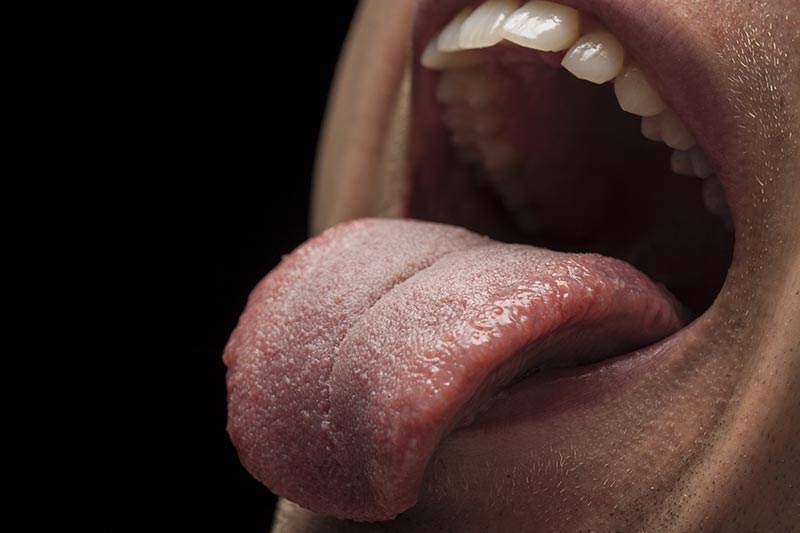
A healthy tongue looks pink, not white. If you notice a whitish or yellowish film on the dorsum, it means the tongue isn’t clean.
Often, a “white tongue” simply signals poor hygiene and increased bacterial buildup, which directly relates to bad breath.
That said, sometimes a white color can indicate another condition. Oral candidiasis, leukoplakia, or oral lichen planus can also change tongue color.
A practical check: clean your tongue. If the coating comes off and the normal color returns, it’s usually just debris and bacteria. If whiteness persists, see your dentist for a reliable diagnosis.
How do I clean my tongue properly?
Use tools designed specifically for the job:
- Tongue cleaner/scraper. Built to remove debris from the back of the tongue. Gently scrape from the deepest area you can tolerate forward, several times, including the sides. Rinse with water at least twice.
- Toothbrushes with a tongue-cleaner side. Some brushes have a textured surface on the back of the head for tongue cleaning.
Can I use my regular toothbrush bristles?
Not recommended. Standard bristles are made for hard surfaces (teeth), not a muscle like the tongue, so they don’t work as well as dedicated tongue scrapers.
When should I use a tongue scraper?
Make tongue cleaning a daily habit, ideally once a day before bed.
Nighttime is key: we produce less saliva while sleeping, which favors plaque accumulation so the before-bed routine is the most important. After brushing and flossing, use the scraper, then finish with a mouthrinse to round out your hygiene routine.
Keeping your tongue clean is simple and quick. Removing bacteria daily helps prevent future oral problems and reduces bad breath.
This information is for guidance. While a white tongue usually reflects hygiene issues, it can sometimes signal other conditions; a professional exam can rule these out.
If you’re concerned about tongue appearance or bad breath, contact us to schedule an appointment.