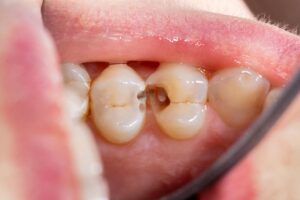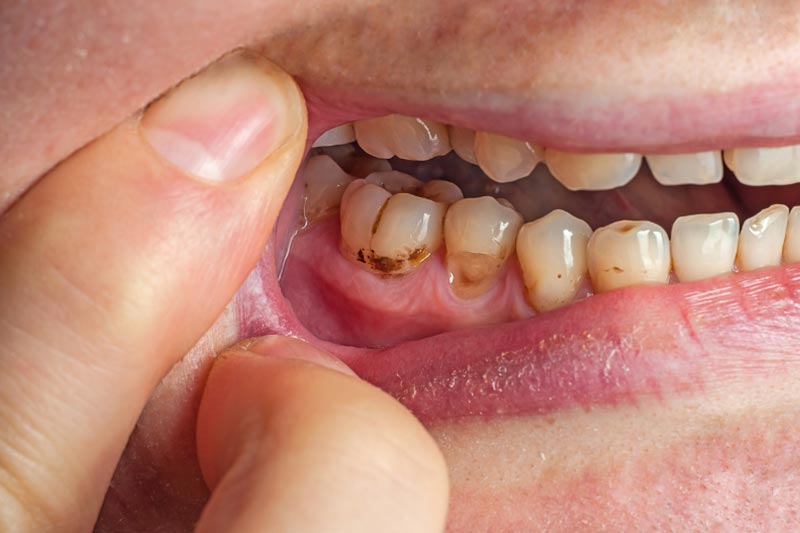
Periodontal disease affects the tissues that support the tooth. Some children, teenagers, and young adults are susceptible to developing the disease at an accelerated pace, often leading to tooth loss at a very early age. This type of periodontal disease is known as aggressive periodontitis.
Aggressive periodontitis is characterized by advanced loss of periodontal tissue and a rapid progression of the disease, which is associated with genetic and immunological factors that favor its onset.
How do you distinguish between chronic periodontitis and aggressive periodontitis?
Chronic periodontitis is a plaque-induced infection that primarily affects adults. It progresses slowly, and factors such as diabetes, stress, and smoking often worsen it.
In contrast, aggressive periodontitis is marked by evident and rapid progression of attachment loss and bone destruction in patients who are otherwise healthy and who also have a family predisposition to the condition.
What are the types of aggressive periodontitis?
Aggressive periodontitis can present as localized or generalized.
Localized aggressive periodontitis is the most severe type because it affects young people around puberty, shows localized bone loss in at least two permanent teeth, and typically involves the first molars and incisors.
Generalized aggressive periodontitis affects individuals under 30 years of age and presents generalized bone loss, involving at least three additional teeth beyond the first molars and incisors.
How is it diagnosed?
Patients with aggressive periodontitis often do not present large amounts of calculus (tartar). Due to the lack of obvious gum inflammation, the disease can go unnoticed until it is in very advanced stages. However, it is readily detectable with a clinical examination performed by a periodontist.
When mobility first affects the front teeth and first molars in very young patients, aggressive periodontitis is identified more easily.
What does treatment involve?
Depending on disease progression and the patient’s age, treatment may range from deep cleaning (scaling and root planing), systemic antibiotics, oral antiseptics, subgingival irrigators, to periodontal surgery always combined with strict, periodic maintenance.
The purpose of this content is to inform about aggressive periodontitis and its association with genetic factors. Given the familial predisposition of this disease, an evaluation is advisable if a close relative has been diagnosed. This text does not replace a consultation; for an accurate assessment of your particular case, a professional evaluation is necessary.
Because aggressive periodontitis can progress with few visible symptoms, a professional exam is essential. Schedule a consultation with Dr. Daniel Fernández in Monterrey. Contact us via WhatsApp, phone call, or through the contact form.