Today, a high percentage of people need dental implants because they have lost one or more teeth.
Periodontitis, untreated tooth decay, or trauma are among the most frequent causes of tooth loss. However, when the problem goes unaddressed for a long time, maxillary bone loss often occurs, making it difficult to place a dental implant.
Fortunately, there are bone-regeneration techniques that can make implant placement posible such as the maxillary sinus lift.
What are the paranasal sinuses?
To understand sinus-lift surgery, it helps to know that the paranasal sinuses are air-filled cavities located behind the cheekbones and above the roots of the molars. They communicate with the nasal cavity through small passages and openings. Lined with the same mucosa as the nose, their functions include humidifying and warming the air and assisting with phonation.
What does a maxillary sinus lift involve?
A maxillary sinus lift is a surgical technique used in modern implantology to enable implant placement in patients who don’t have enough bone height in the upper-molar region.
This procedure takes advantage of the two natural cavities on either side of the nasal passages and modifies them when there isn’t enough bone to properly anchor dental implants.
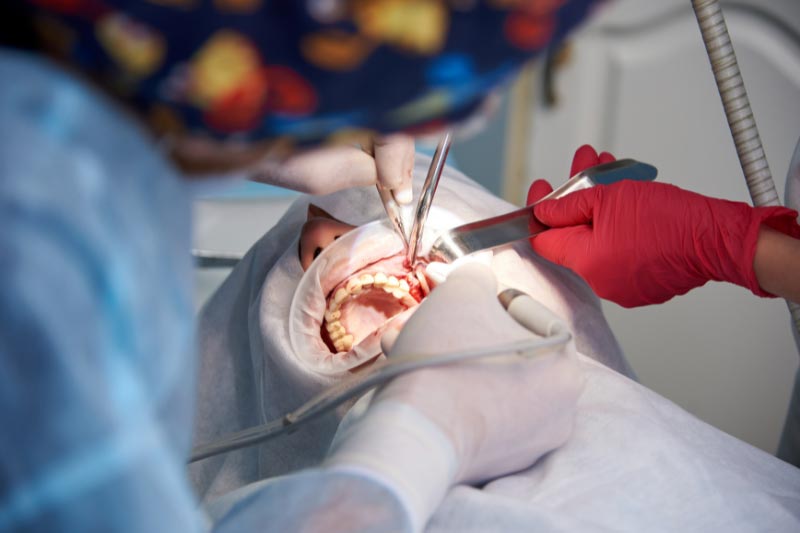
It is not an especially traumatic intervention, but it does require solid technical expertise. The surgeon elevates the membrane that lines the maxillary sinus and places additional bone beneath it so that an artificial tooth can later be implanted. The grafted bone may come from the patient or from biomaterials that serve the same function as native bone. The result is sufficient bone volume to place implants without affecting the patient’s facial structure.
When performed correctly, complications are uncommon. If issues such as sinus-membrane perforation or nerve involvement occur, there are techniques to address them. It’s even possible to repeat the procedure if the grafted bone undergoes resorption.
Given its high success rate, this technique has increasingly become a routine procedure to regain the bone needed for dental implants. Only a specialist can advise whether it’s the most appropriate option in your case. If you have questions about the procedure, don’t hesitate to contact us.
This article explains what a maxillary sinus lift is a bone-regeneration technique that allows implant placement in patients with insufficient bone height. It is a preparatory procedure, and not all patients need it. This content is informational; only an evaluation by a specialist can determine whether this technique is necessary in your case.
If you’ve been told you don’t have enough bone for implants, a maxillary sinus lift may be the solution. Book an evaluation. Contact us by WhatsApp, phone call, or through our form.