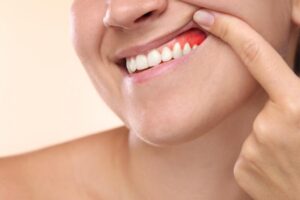
Dental sensitivity is defined as a sharp tooth pain caused by exposed dentin that appears after contact with seemingly harmless external stimuli such as heat, cold, or acidic foods. It’s a very common condition in the general population. It affects 7 out of 10 adults and usually appears between 18 and 40 years of age, with a higher prevalence among women.
Under normal conditions, dentin is covered by the tooth’s enamel at the crown and by the gum. Dentin contains a large number of pores or tubules that run from the outside of the tooth toward the nerve in the center. When dentin is exposed, these tubules can be stimulated by temperature changes or certain foods.
What causes dental sensitivity?
Dentin exposure can occur for several reasons. The most common include:
- Consumption of acidic beverages such as sodas and citrus juices.
- Bruxism (teeth grinding/clenching).
- Brushing with an abrasive toothpaste and/or using a hard-bristled toothbrush, plus poor brushing technique.
- Periodontal disease.
- A chipped or cracked tooth.
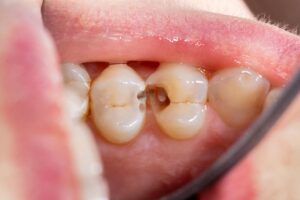
- Dental caries (tooth decay).
- Teeth whitening.
How can dental sensitivity be recognized?
The pain from dental sensitivity is easy to recognize: the person feels an intense, localized pain that appears in response to an external trigger. The pain disappears when the stimulus is no longer in contact with the tooth or sensitive area.
What is the indicated treatment for dental sensitivity?
Recommended treatment depends on the underlying cause:
- If due to dental caries, the advisable treatment is a filling.
- If caused by a chipped or cracked tooth, it may be necessary to place a resin (composite) restoration, perform a root canal, or extract the tooth.
- When gum recession is the result of aggressive brushing, a gum graft is indicated.
- If the cause is periodontitis, periodontal treatment is recommended.
- When bruxism is the cause, and depending on severity, a porcelain veneer or a crown may be required; in addition, a night guard (occlusal splint) should be used.
- If the origin is habitual consumption of acidic drinks, the solution is to limit their intake. The dentist should also evaluate the degree of erosion to determine whether any type of restoration is necessary.
- Post-whitening sensitivity usually subsides on its own after a few days. If it persists, a pain reliever and a desensitizing toothpaste should be prescribed.
How can I prevent dental sensitivity?
Dental sensitivity can be prevented by following these recommendations:
- Establish healthy eating habits and reduce the consumption of acidic foods and beverages.
- Do not use your teeth to open packages.
- Maintain a proper hygiene routine using a soft or medium-bristled toothbrush, dental floss, and mouthrinse.
However, once pain appears, the most advisable step is to see your dentist, since only they can identify the cause of dental sensitivity and determine the most appropriate solution. Home remedies and desensitizing toothpastes can ease the discomfort, but they do not solve the underlying problem.
The information in this publication is for guidance. Because sensitivity can be caused by caries, bruxism, or periodontal disease, a professional evaluation is essential to determine the correct treatment.
Find the cause of your dental sensitivity book an evaluation with Dr. Daniel Fernández.