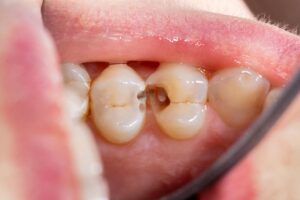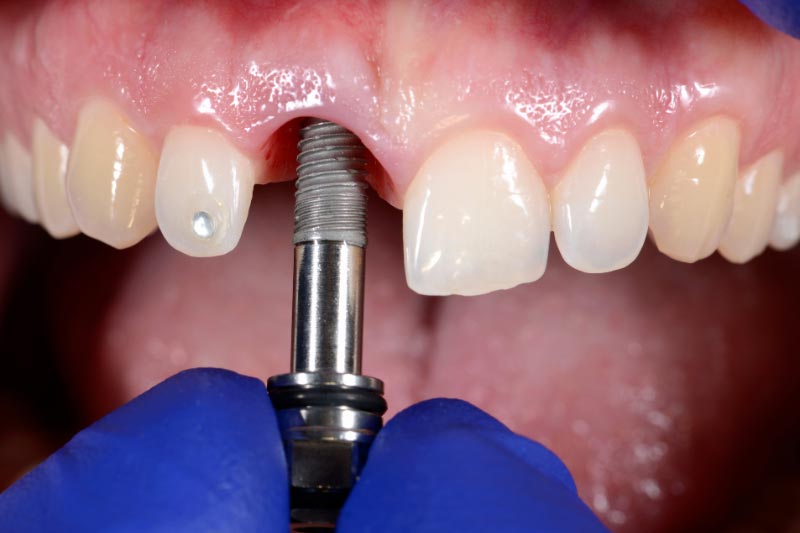
The most comfortable, effective, and long-lasting solution to replace a missing tooth is undoubtedly a dental implant.
An implant is designed to replace the missing root and hold the dental prosthesis in place. It is typically screw-shaped and made of titanium, a biocompatible material that allows it to fuse to bone.
Complete step-by-step implant procedure
Generally speaking, a high-quality dental-implant process involves four phases: diagnosis & planning, surgery, prosthesis/rehabilitation, and maintenance.
Diagnosis & planning phase
This is a critical stage for implant placement. A precise diagnosis and proper surgical plan are indispensable for successful treatment.
This phase includes radiographs as well as a Cone Beam CT (CBCT) a three-dimensional scan of the patient’s mouth used to plan the surgery and determine the most appropriate intervention, and whether there is sufficient bone to support the implant.
Other details are also planned, such as the position, size, and angulation required for the implants to be placed.
Surgical Phase
In this phase, the specialist makes a small incision in the gum, places the titanium implant, and places sutures. A few days later, the patient returns for a checkup to have the sutures removed.
For the next three to four months after surgery, the implants fuse to the bone. During this time, the patient can use temporary prostheses.
Implant placement is a minor surgery performed with local anesthesia and typically lasts about one hour. Contrary to what many people think, it is a straightforward procedure that usually causes less discomfort than having a wisdom tooth extracted.
Conscious sedation is also an option for people who experience high levels of stress or anxiety when undergoing dental treatment.
Prosthetic or rehabilitation phase
Once the implant has fused to the bone, the implant is uncovered and a healing abutment is placed so the gum does not grow back over it.
After two weeks, the specialist places an impression post in the patient’s mouth to transfer the shape of the gum, the teeth, and the exact position of the implant. The impression is sent to the lab to begin fabricating the prosthesis.
When the prosthesis is finished, it is tried in so any necessary adjustments can be made to shade, shape, and bite. Once the final prosthesis is placed, the patient should be able to eat normally and feel no discomfort.
Maintenance phase
Regular follow-ups with the specialist are essential to ensure the long-term success of dental implants.
This allows the dental professional to periodically review and evaluate any issues that could interfere with the implant’s health.
The main reason for these visits is to monitor the condition of the tissues surrounding the implant both gum and bone and to confirm the load on the implant is appropriate.
Patients with implants should return every six months for review although, depending on the individual case, the dentist may recommend more frequent checkups.
We are specialists in dental implants
Dr. Daniel has over 15 years of experience as a Periodontist and Implantologist in Monterrey, Nuevo León. He also completed an implant externship at Stony Brook University (New York) and has participated in multiple national and international conferences.
Purpose of this publication: to explain the entire implant-treatment process, including the maintenance phase, which is fundamental to long-term success. This text is general in nature. An implant treatment is an investment in your health that requires professional follow-up. To get started, a consultation is necessary.
Begin planning your dental implant treatment. Schedule a diagnostic evaluation. Contact us via WhatsApp, phone call, or through our form.