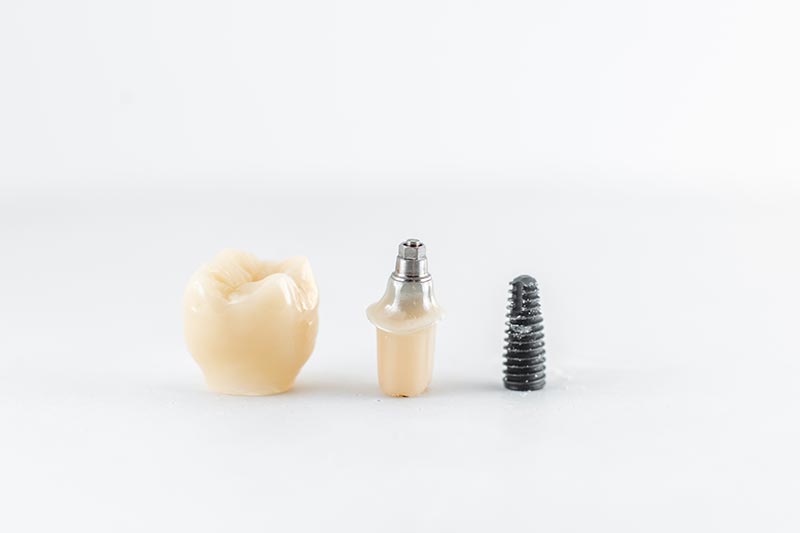
Dental implants are the best solution for tooth loss because they look and feel like natural teeth.
However, not all dental implants are the same. As with other dental treatments like orthodontics there are differences. Below we explain what sets them apart and how to choose the best option.
Implant quality
Modern dental implants have no known expiration date, and in clinical use they deliver excellent results in longevity, comfort, esthetics, and reliability.
The vast majority are made of titanium, a fully biocompatible material that allows the implant to fuse to bone in a process called osseointegration.
Some clinics also place zirconia implants another biocompatible biomaterial though their use is less widespread because long-term data on strength and durability are still limited.
Implants should comply with FDA quality criteria and be backed by scientific research that supports their use and predictability.
An implant should have robust, long-term studies so we know, within health-care parameters, that it offers a high long-term success rate.
At Dr. Daniel Fernández Periodontics & Implants, we use only titanium implants with proven quality because:
- They are based on years of research and experimentation.
- They are manufactured with maximum precision.
- Their production chain undergoes strict quality controls.
- They have a low failure rate.
- They include a warranty in the event of early failure.
- They are FDA-approved.
The clinician’s training
Another key factor when choosing a clinic is the training and experience of the professional who will plan and place the implants.
Many dentists place implants without formal training.
The clinician who places implants must be thoroughly trained in oral surgery, soft- and hard-tissue management, and have solid implant prosthodontics foundations. They must also be able to interpret radiologic studies and build an appropriate treatment plan. Periodontists are trained across all these areas and are therefore especially qualified to place implants.
Dr. Daniel Fernández is a specialist in Periodontics with 10+ years of experience and has successfully placed hundreds of dental implants.
The technique used
Computer-guided surgery
Thanks to advances in technology, implant dentistry has seen major changes in recent years, with techniques that are more effective, less invasive, and improve the postoperative experience. One such advance is computer-guided surgery.
Computer-guided surgery allows the implant specialist to place implants exactly where they were virtually planned using 3D technology.
Because the intervention is simulated and planned beforehand, outcomes are more predictable, since:
- Greater precision often avoids raising a flap to expose bone.
- Inflammation, infection risk, and pain are reduced.
- In many cases, sutures aren’t needed.
- Surgery time can be reduced by up to 70%.
At Daniel Fernández Periodontics & Implants, we use computer-guided surgery to achieve the best possible results.
Conscious sedation
Any serious clinic should be able to offer conscious sedation when patients need or prefer it.
Conscious sedation is commonly used for implant surgeries and is especially helpful for people with high dental anxiety. The patient remains sedated but semi-awake, allowing for quick recovery.
In Mexico, sedation must be performed by a physician specialized in Anesthesiology. For this reason, Dr. Fernández performs treatments alongside an anesthesiologist equipped to sedate patients safely.
Why is there so much variation in implant costs?
It’s common to see clinics advertising very low implant prices. However, these “hook” prices often exclude items such as abutments, prosthetic components, or even suture removal so what seemed inexpensive at first can end up costing the same or more than in more reputable clinics.
Always request a final, itemized quote. A bait price may attract attention, but it is misleading and unfair.
At Dr. Daniel Fernández Periodontics & Implants, our final quote includes:
- Implant placement surgery.
- Suture removal.
- Implant uncovering.
- Second-stage (healing) screw placement.
- Impressions and all components needed to fabricate the Crown.
- Definitive porcelain-fused-to-metal crowns.
- All office visits during treatment.
- Implant replacement in the event of immediate or early failure.
In summary
- Quality implants meet FDA requirements.
- Quality matters but so do the specialist’s training and experience, and the technique used.
- Remember: “cheap” can end up expensive. This applies to implant treatments, too.
This article explains that choosing the “best” implant depends on three factors: the implant’s quality, the specialist’s training, and the technique used. This content is informational. To ensure your treatment combines a quality implant, the right technique (such as guided surgery), and the care of a qualified professional, a clinical evaluation is essential.
Receive a detailed treatment plan and final quote for your dental implants. Book your professional evaluation. Contact us via WhatsApp, phone call, or by completing our web form.