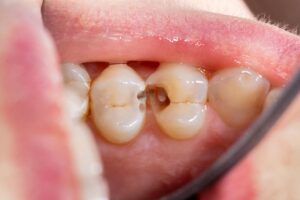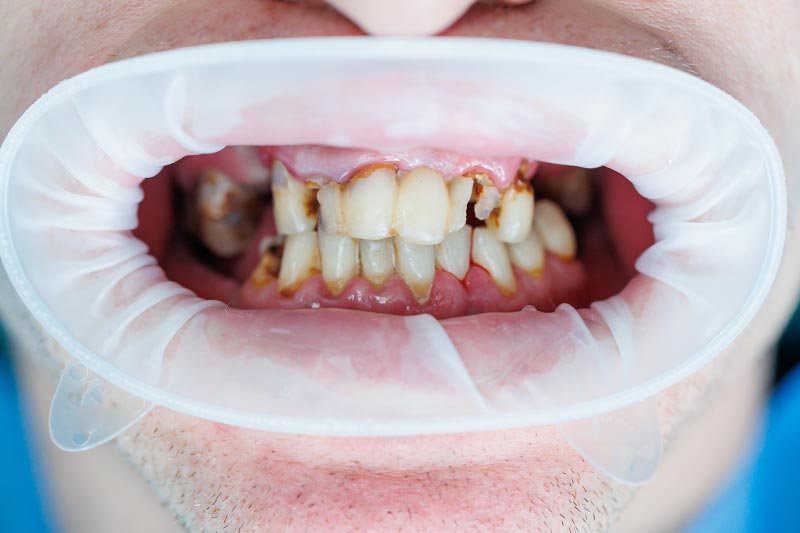
Caries are among the most common oral-health problems in the general population. The characteristic holes of dental caries result from demineralization caused by acids released by dental plaque activity.
Most people think of “decayed teeth” as holes in the crown (the visible part of the tooth). However, caries can also affect other areas. When decay involves the tooth root, dentists call it root caries.
People with periodontal disease are at higher risk of root caries because destruction of the periodontal tissues exposes the roots. This is why older adults the group most prone to gum problems face a greater risk of root caries.
Adults with poor oral hygiene, systemic diseases, or those taking medications that reduce salivary flow are also more susceptible.
How is root caries identified?
Root caries usually begins as a small, light-colored or slightly yellow lesion in a well-defined area, with a very smooth surface. As it progresses, the lesion darkens (from brown to black) and the surface becomes harder.
The teeth most frequently affected are the premolars and the teeth in the anterior sextant.
What are the risk factors for root caries?
- Salivary alterations: xerostomia favors bacterial retention, increasing caries risk. Certain medications and treatments can reduce saliva production.
- Dental plaque: the main cause of caries. Inadequate hygiene fails to remove plaque effectively.
- Smoking: tobacco alters saliva and can increase the number of cariogenic bacteria.
- Previous history of caries.
How is root caries treated?
Tooth roots are especially vulnerable to plaque bacteria because they have less enamel than the crowns. As a result, infection can advance quickly and reach the inner, more sensitive layers (dentin and pulp).
For this reason, root caries often requires a root canal to remove the pulp and desensitize the tooth. When damage is very severe, the indicated treatment is tooth extraction.
Unlike other forms of decay, root caries doesn’t usually require restoring the crown with fillings or prosthetic crowns, since it often affects only the root.
How can root caries prevent?
Brush after every meal and floss once a day to prevent all types of caries, and schedule regular dental visits. Fluoride mouthrinses are also recommended especially for older adults, who have a higher risk of root caries.
This article explains what root caries is and why it can progress quickly, often requiring a root canal or extraction. Timely evaluation by a specialist is the best way to avoid these treatments.
Prevent root caries and other conditions book a checkup with Dr. Daniel Fernández.